USPS vs UPS vs FedEx — Which Is Fastest for Your Area?
Every few months someone publishes another “definitive” comparison of USPS, UPS, and FedEx that concludes with something like “FedEx is fastest, USPS is cheapest, UPS is best for heavy packages.” And while none of that is wrong exactly, it’s not particularly useful either — because the real answer depends almost entirely on your specific situation.
A package from New York to Los Angeles on UPS Ground takes about the same time as the same package on FedEx Ground. But that same package going from rural Montana to a small town in Mississippi? Completely different story.
Where you live changes everything about which carrier is actually fastest for you.
The Honest Starting Point: “Fastest” Means Different Things
Before comparing, it helps to separate “fastest possible” from “fastest for standard shipments.”
Fastest possible — all three carriers offer overnight and next-day services that deliver in 24 hours or less. FedEx has a slight edge here for pure overnight speed with FedEx Priority Overnight, but UPS Next Day Air is essentially equivalent. USPS Priority Mail Express also exists, but UPS and FedEx are generally preferred for time-critical overnight shipments due to broader next-day coverage and more reliable delivery windows.
Fastest for standard ground shipping — this is where location matters enormously and where the real differences between carriers emerge for everyday shoppers and small businesses.
Speed by Service Tier — 2026
Overnight / Next Day
| Carrier | Service | Typical Speed |
|---|---|---|
| FedEx | Priority Overnight | Next business day by 10:30am |
| FedEx | Standard Overnight | Next business day by 3pm |
| UPS | Next Day Air Early | Next business day by 8am |
| UPS | Next Day Air | Next business day by 10:30am |
| USPS | Priority Mail Express | 1–2 days, overnight where available |
FedEx has the fastest delivery between UPS and USPS at the premium express tier. However, the practical difference between FedEx Priority Overnight and UPS Next Day Air is minimal for most destinations — both deliver next business day in major metros. USPS Priority Mail Express is the outlier here: it’s available and genuinely fast in areas near major postal hubs, but coverage and cutoff times are less consistent than FedEx or UPS.
Verdict for overnight: FedEx or UPS — roughly equivalent. USPS only if cost is the primary concern and the next-day guarantee isn’t critical.
2-Day and 3-Day Services
| Carrier | Service | Typical Speed |
|---|---|---|
| FedEx | 2Day | 2 business days |
| UPS | 2nd Day Air | 2 business days |
| USPS | Priority Mail | 1–3 days (not guaranteed) |
This is where USPS starts to slip. 2025 had been extra painful for USPS transit times — the service has been running slower than its traditional Priority Mail 1–3 day promise in many markets. Priority Mail is not a guaranteed service the way FedEx 2Day and UPS 2nd Day Air are — USPS’s 1–3 days is an estimate, not a commitment.
When it runs to schedule it’s excellent value. When it doesn’t — and in 2025 and 2026 it has underperformed more than in previous years — there’s no guaranteed refund or remedy.
FedEx 2Day and UPS 2nd Day Air are both guaranteed services with money-back policies if delivery misses the window. For time-sensitive 2-day shipments, either is more reliable than USPS Priority Mail.
Verdict for 2-day: FedEx or UPS if the timing genuinely matters. USPS Priority Mail if cost matters more than the guarantee.
Ground Shipping (the most common scenario)
| Carrier | Service | Typical Speed |
|---|---|---|
| UPS | Ground | 1–5 business days by zone |
| FedEx | Ground / Home Delivery | 1–5 business days by zone |
| USPS | Ground Advantage | 2–5 business days |
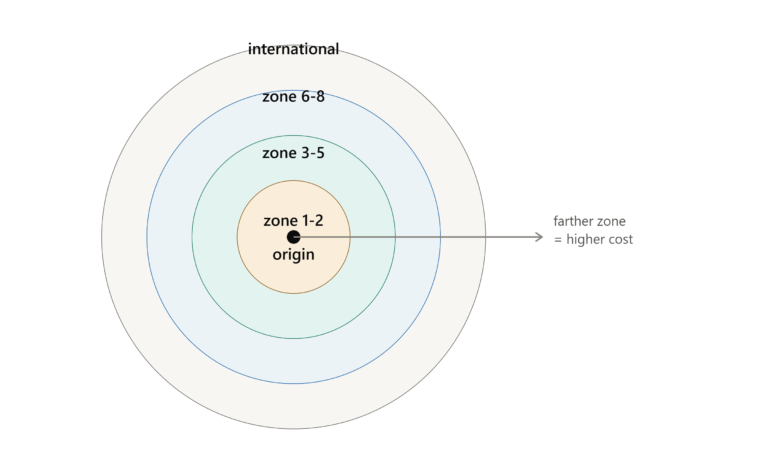
FedEx and UPS lead on fast and express delivery. USPS is the slower, more affordable choice for standard shipments. But on ground specifically, UPS and FedEx are remarkably similar — both use zone-based routing that delivers in 1 business day for nearby destinations and up to 5 business days for cross-country.
Looking at Q4 2025 peak season performance — the most demanding test period for any carrier — UPS delivered at 97.6% on-time, holding steady from 97.6% in Q4 2019. That’s a genuinely impressive number during the holiday season. FedEx Ground performs comparably in most markets.
USPS Ground Advantage generally runs 2–5 days and is priced significantly lower — USPS First Class Package Service runs $4–$5 for a 12 oz package going cross-country, while UPS and FedEx start around $9–$12 for the same delivery. You’re trading some speed and reliability for cost savings.
Verdict for ground: UPS Ground and FedEx Ground are essentially tied on speed. USPS Ground Advantage is slower but notably cheaper for lightweight packages.
Where You Live Changes Everything
This is the section most comparison articles skip — and it’s the most important one for everyday shoppers.
Urban Metro Areas (New York, LA, Chicago, Dallas, Miami)
All three carriers have dense infrastructure in major cities. Delivery times are at their fastest and most consistent. FedEx, UPS, and even USPS tend to hit their service commitments reliably in major metros. The difference between carriers here is minimal for ground shipping — you’re likely getting 1–2 day ground delivery from all three within your metro area regardless of which one is handling it.
Suburban Areas (within 50 miles of a major city)
Still well-served by all three. UPS and FedEx both have strong suburban networks built around their hub-and-spoke distribution models. USPS covers suburban areas comprehensively through its post office network. Transit times are reliable and close to stated windows for all three.
Rural Areas and Small Towns
This is where the differences get real. USPS is the only carrier legally mandated to deliver to every address in the United States — rural routes, dirt roads, remote addresses that UPS and FedEx don’t serve efficiently or charge significant rural delivery surcharges to reach.
USPS remains the only carrier with universal access to traditional mailboxes and PO Boxes. If you’re in a rural area or your address is a PO Box, USPS isn’t just the cheapest option — it may be the only practical one. UPS and FedEx both charge residential surcharges that are even higher for addresses flagged as rural, and their coverage becomes less reliable the further you get from a major metro.
For rural recipients expecting packages, USPS is almost always the fastest option in practice — not because it’s faster per se, but because it reaches you directly where UPS and FedEx may pass off to USPS for final delivery anyway through hybrid services like UPS SurePost and FedEx Ground Economy.
Near State Borders
An often-overlooked factor: UPS and FedEx zones are calculated from origin to destination in a straight line, not by route. A package crossing a state border to a city that’s physically close but in a different zone can take longer than expected. USPS zones work differently and can sometimes be faster for cross-border shipments between nearby cities in different states.
On-Time Reliability — 2026 Data
Speed on paper means nothing if the carrier doesn’t deliver on time. Here’s what the actual performance data shows:
UPS delivered at 97.6% on-time during Q4 2025 peak season. FedEx Ground performs comparably in most markets. USPS sits at a 94.3% on-time delivery rate under normal conditions — lower than UPS and FedEx, and the gap widens during peak periods.
The USPS reliability gap is most pronounced during:
- Holiday peak season (November–January)
- During operational disruptions and staffing shortages
- In markets where USPS infrastructure is older or understaffed
For time-sensitive shipments where reliability matters as much as speed, UPS and FedEx both outperform USPS on consistent delivery. For everyday non-urgent shipments where “a day or two either way doesn’t matter,” USPS’s lower cost often makes sense despite the slightly lower reliability.
The Surcharge Reality — 2026 Updates
The sticker price comparison between carriers is almost always misleading because of surcharges. UPS and FedEx residential delivery surcharges are now $6.45–$6.95 following 2026 General Rate Increases. These are added to every residential delivery — which is the majority of e-commerce shipments.
Additional surcharges that can change the math significantly:
UPS: UPS imposes a large number of surcharges on packages compared to USPS and FedEx. While prices might seem comparable to USPS at first glance, you may be surprised to find added line charges when it’s time to purchase your label.
FedEx: FedEx bumped rates by 5.9% for Ground, Express, and Freight services effective January 6, 2025, and implemented a minimum billable weight of 40 lbs for packages meeting the criteria for Additional Handling Surcharge — Dimension.
USPS: As of July 12, 2026, USPS’s dim divisor dropped from 166 to 139 across Priority Mail Express, Priority Mail, Ground Advantage, and Parcel Select — the same divisor UPS and FedEx already use. USPS also eliminated ounce-based pricing tiers for published Commercial Ground Advantage rates, raising those rates by an average of 11.8%.
The July 2026 USPS dim weight change is significant for anyone shipping bulky but lightweight packages — the same package that was priced by actual weight before July 2026 may now be priced at a higher dimensional weight, closing some of USPS’s cost advantage on those shipments.
Which Is Actually Fastest for Your Situation
Rather than a single verdict, here’s how to think about it based on your actual scenario:
You’re in a major city and need something there overnight: FedEx Priority Overnight or UPS Next Day Air — essentially the same. Choose based on price for your specific route.
You’re shipping ground and need it there in 2–3 days: UPS Ground or FedEx Ground are your most reliable options. Both outperform USPS for consistent speed on time-sensitive ground shipments.
You’re in a rural area or shipping to a PO Box: USPS — it’s the only carrier that can reliably reach every address and deliver to PO Boxes. UPS and FedEx will either add rural surcharges or pass the last mile to USPS anyway.
You’re shipping lightweight packages and cost matters more than speed: USPS Ground Advantage — it’s meaningfully cheaper than UPS and FedEx for packages under 1–2 lbs, and the 2–5 day timeline is acceptable for non-urgent shipments.
You need 2-day delivery with a guarantee: FedEx 2Day or UPS 2nd Day Air — both offer money-back guarantees that USPS Priority Mail doesn’t match.
You’re shipping heavy packages ground: UPS Ground is the best ground delivery service in the industry, with the lowest rates and fastest delivery times for heavier packages — generally competitive or better than FedEx at higher weights, especially for business addresses.
The Honest Answer to “Which Is Fastest”
FedEx is technically fastest at the premium overnight tier. UPS and FedEx are essentially tied for ground speed and reliability. USPS is slowest on average but fastest for rural addresses and PO Boxes, and the only real option for certain address types.
The single most useful thing you can do is stop thinking about these carriers as having a fixed ranking and start thinking about them as tools with different strengths for different jobs. A carpenter doesn’t use a hammer for every task. Neither should a shipper.
For the specific question of “fastest for your area” — check the transit time calculator on each carrier’s website using your actual origin and destination zip codes. That five-minute exercise gives you better information than any general comparison article, including this one.
Receiving a Package Through USPS, UPS, or FedEx After a SHEIN or Temu Order?
Most SHEIN and Temu orders in major metro areas are handled by SpeedX for last-mile delivery. But in areas SpeedX doesn’t cover, USPS steps in. If your order was handed to USPS after clearing customs, your SpeedX tracking will go quiet and a new USPS tracking number should appear in your SHEIN or Temu order page.